Furnishing a Home in Mexico on Short Visits: What to Decide First (and What Can Wait)
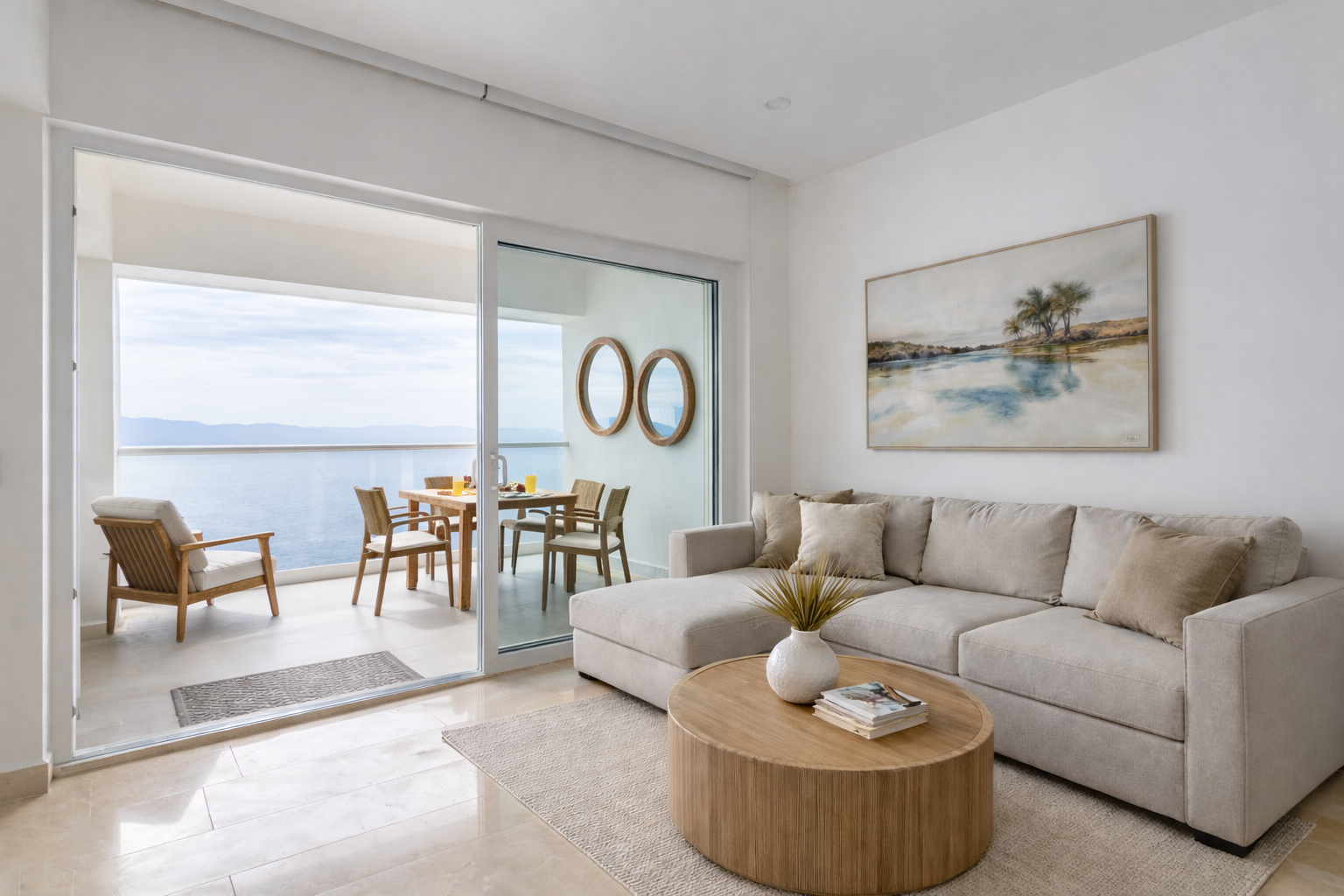
Bright coastal living space with a calm, open feel and indoor–outdoor flow.
Furnishing a home in Mexico on short visits can feel like living in fast-forward.
You arrive with a list. You want to make the trip count. If the property is going to be a rental, there’s usually a second clock running too — the next high season.
Short visits have a way of pushing decisions toward what feels immediately satisfying: buying what’s on the showroom floor, choosing the piece that looks good enough, leaving with something “done.” Meanwhile, the decisions that determine whether the home feels easy to live in — layout, scale, flow, durability — take a different kind of focus. They ask for measurements and restraint, and the progress is less visible at first, even though it’s the part that makes everything else easier.
This article is a guide to using limited time for the decisions that carry the most weight, leaving the finishing layers for when they can actually do their job, and knowing when “all at once” requires a different plan.
Layout First: How to Think About Space Before Choosing Furniture
When people think about furnishing a home, they often picture individual pieces — a sofa, a dining table, a bed. What tends to get overlooked is the system those pieces need to belong to.
Layout asks for a different starting point. It looks at how the space needs to work before deciding what fills it.
In practical terms, layout is about movement and use: how you enter a room, where you naturally walk, where you pause, and how furniture supports those patterns instead of interrupting them. When this framework is clear, furniture choices become far easier. When it isn’t, even good pieces struggle to feel right.
In older Mexican buildings, this matters more than people expect, because many homes don’t offer obvious cues.
Take a common older condo layout: you enter directly into the living space, with the kitchen along one wall and a balcony at the far end. There are no centered windows, no obvious “front” of the room telling you where furniture should go. A good layout here isn’t about centering a sofa or lining things up visually. It’s about carving out zones — where circulation happens, where seating begins, and how you move from entry to balcony without cutting through the middle of the room.
Large open-concept spaces in newer buildings create a different version of the same challenge. Without boundaries, furniture can end up floating or clustering, leaving the room feeling either unfinished or strangely crowded. Layout, in these cases, is about defining use before choosing physical pieces.
Once placement makes sense, scale comes next and is inseparable from it.
It isn’t enough to decide that a sofa goes along a certain wall. The size of that sofa, its depth, and the distance between it and surrounding pieces determine whether the room feels open or constricted. Walkways, door swings, chair pull-outs, and daily movement all rely on spacing that’s generous enough to feel natural.
This is where many spaces falter, not necessarily because the layout concept was wrong, but because proportion and clearance weren’t fully accounted for. It looks like the furniture fits on paper, but movement feels tight. The room technically works, but it never relaxes.
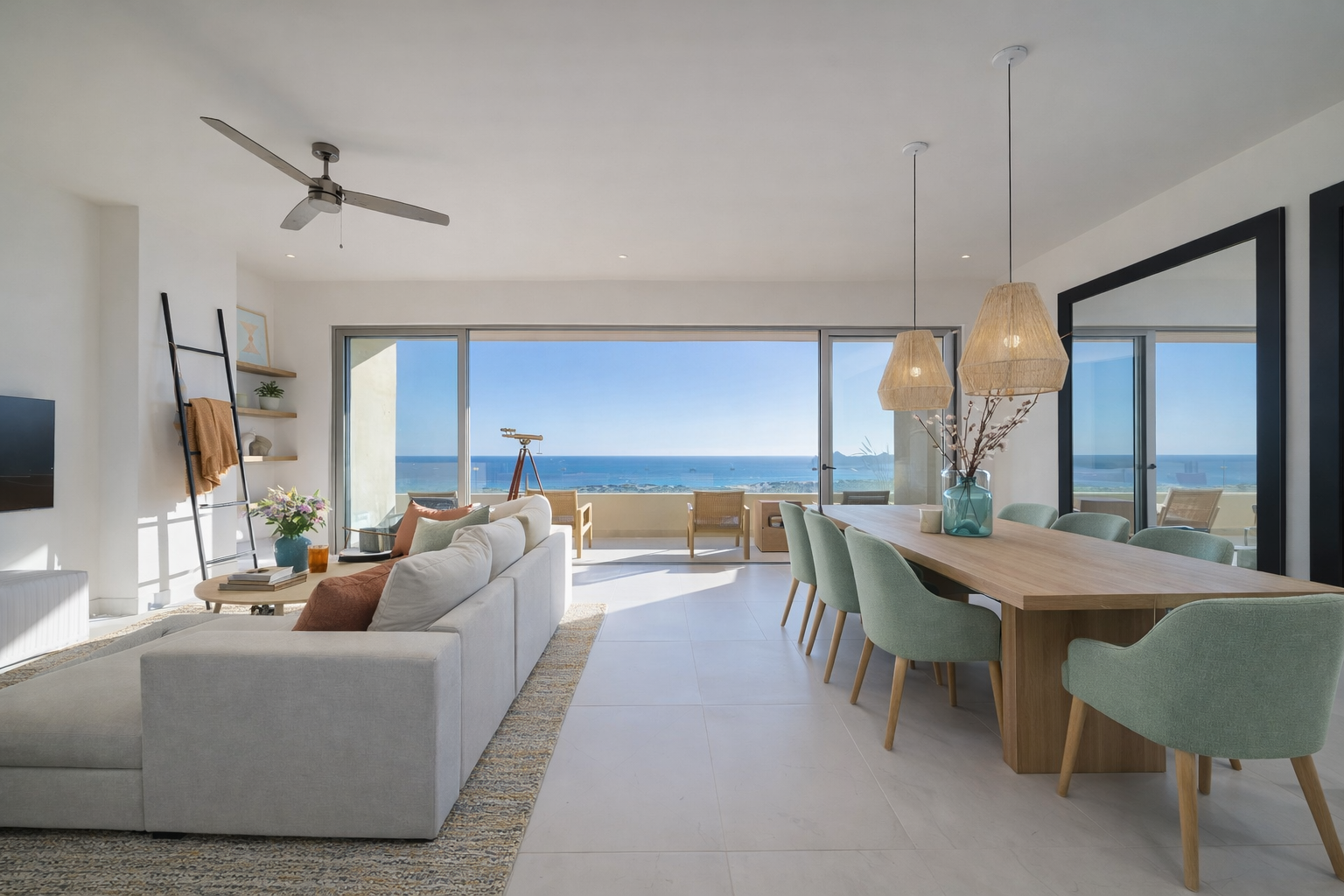
Open-plan living and dining with clear zones and easy circulation.
Design insight: Layout is placement plus clearance.
Access belongs in this thinking as well. Elevators, stairwells, door widths, and tight turns quietly shape what’s possible long before furniture is ordered. When these realities are considered at the layout stage, they rarely become problems later.
A well-considered layout holds. It continues to work even as furniture changes, finishes evolve, or styles shift. It doesn’t need to be revisited or corrected — it simply supports whatever comes next.
Once this foundation is in place, you can move forward with confidence. Comfort decisions become clearer. Finishing layers land more naturally. The rest of the process stops feeling reactive.
The good news about getting this part right
Layout and scale deserve to be handled early, but they don’t need to be completed entirely on-site.
An initial walk-through gives you what you can’t get later: a feel for the light, the connections between rooms, ceiling height, access points, and how the space “behaves”. After that, the planning can happen calmly. Floor plans, photos, and basic measurements (outlet placement and window locations help too), are enough to build a layout with the right clearances and proportions. You can read my easy guide to measuring you space, here.
Short visits are often best used for seeing the space clearly. The decisions themselves don’t have to be rushed into the same week. And yet, even when people understand the value of planning, the timeline often wins. Rentals come with a revenue clock, and high season turns short visits into a sprint. That’s where rushing starts, and where the expensive mistakes usually begin.
The Cost of Rushing (Especially for Rentals)
I get it, furnishing for rental properties introduces a certain kind of urgency.
Owners are often eager to get a home on the market quickly so it can begin earning. That goal is understandable, but it compresses timelines in ways that create stress and rushed decisions.
One adjustment I have seen many people struggle with is delivery timing. In Mexico, even large retailers operate on longer schedules. If you aren’t purchasing a floor model and taking it home immediately, delivery commonly takes three to four weeks. This applies to custom furniture and big-box stores alike. If you want something custom-made, it can take up to 3 months.
When that reality isn’t factored in early, decisions start to speed up. Pieces are chosen because they’re available now. Measurements feel less critical. Construction details fade into the background.
For rentals, the consequences show up quickly. The most common issues aren’t about style — they’re about materials. MDF that swells, veneers that lift, cushions that collapse, fabrics that snag or stain, faux leather that flakes, and low-grade metal finishes that spot or corrode in coastal air. Under guest use, those weaknesses don’t stay hidden for long.
Design insight: Speed rarely removes friction. It usually relocates it.
Designers can help absorb this pressure by setting realistic timelines, coordinating orders, and managing delivery logistics. When expectations align with how things actually move here, there’s far less need to rush decisions simply to keep things moving.
What Improves Daily Life First
Once layout and scale are resolved, the next priority is livability.
For homeowners, that means the home feels good to be in while everything else comes together.
For rentals, it means the home can go on the market without guests feeling like they’re staying in something half-finished.
Daily comfort registers immediately. Cohesion takes longer.
Sleep is usually the first make-or-break. A supportive mattress, breathable bedding, and a bed setup that feels stable and intentional changes the entire experience of the home. In a warm, humid climate, discomfort compounds quickly — and in rentals, sleep quality is one of the fastest ways a guest decides whether the place “feels worth it.”
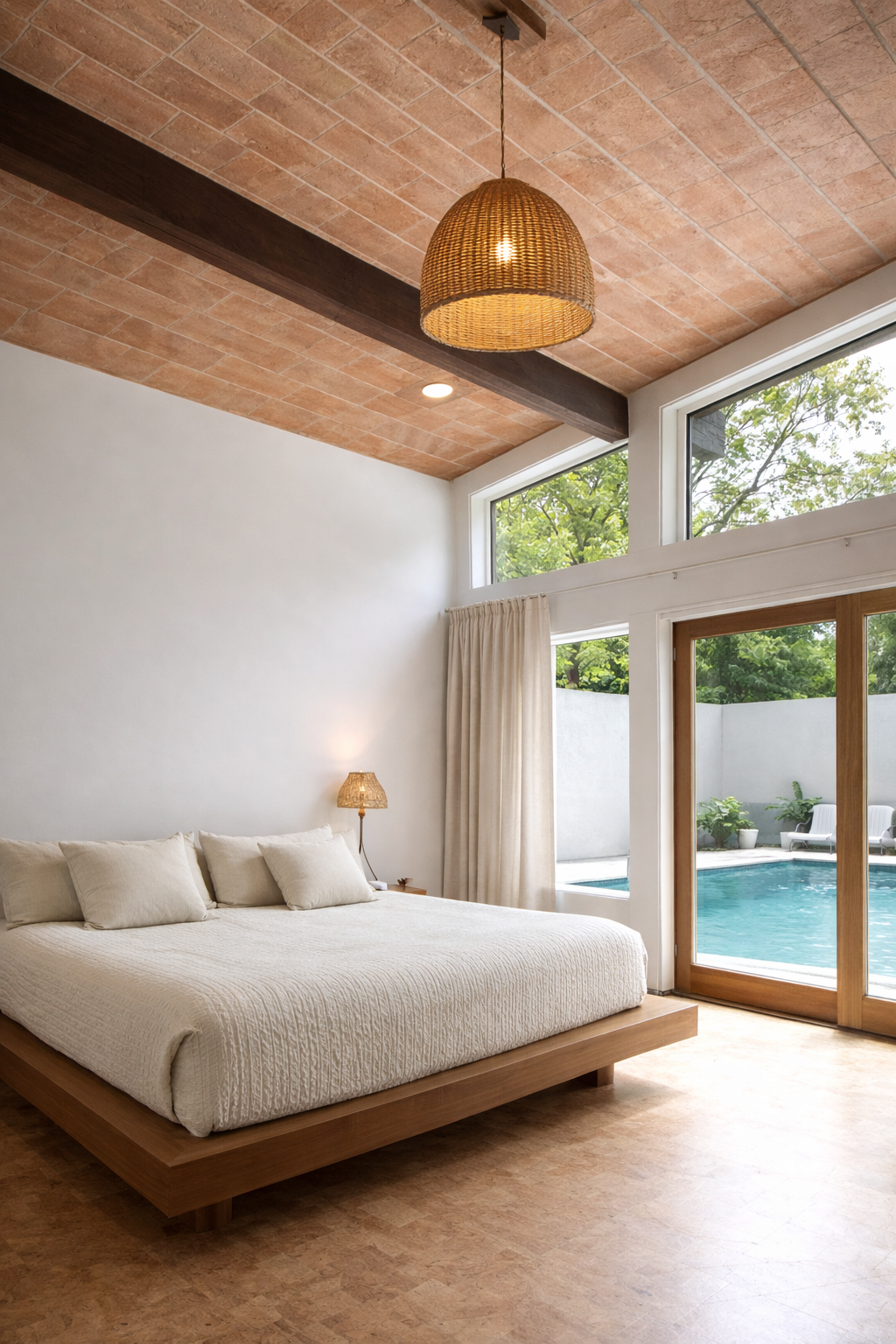
A bedroom that feels comfortable and functional, even before it’s fully styled.
Seating comes next. A sofa or primary seating that supports how people actually sit — reading, lounging, watching a movie, having a drink before dinner — shapes how much time people spend in the space. Comfort matters more than style here (at first). Cushions that hold their shape, fabrics that are easy to live with, and seating that doesn’t feel flimsy make the home feel trustworthy.
Lighting is another quiet driver of comfort. Even if the “final” fixtures come later, you need usable light where life happens: bedside, kitchen, living area. A home can look unfinished and still feel calm if it’s properly lit. A home can look stylish and still feel irritating if the lighting is harsh or insufficient.
Window treatments belong in this early layer too. In Puerto Vallarta, they’re not an accessory. They affect glare, heat, privacy, and how well people sleep. This is one of the fastest upgrades that makes a home feel more settled, both for living and for hosting.
Finally, climate comfort underpins everything. Airflow, air-conditioning, fans, breathable textiles, and materials that don’t trap heat shape how the home feels from morning through evening. These details tend to be noticed more than décor — even if no one can put their finger on what it is.
Design insight: Comfort is what allows a space to be lived in while it’s still becoming itself.
For rentals, this is often the difference between “good enough to list” and “people actually want to return.” A space that sleeps well, sits well, stays cool, and feels calm forgives a lot. It doesn’t need to be fully styled to feel considered.
What’s Worth Waiting For
The items people are most tempted to buy on short visits are often the ones that benefit most from patience.
Art, décor, soft furnishings, extra bedding, and paint color are easy to shop for. They’re readily available. They feel personal. They also give the strongest sense of progress when time feels tight.
But these pieces don’t define a room on their own. They respond to it.
Art reads differently once furniture is placed and sightlines are established. Scale becomes clearer when walls aren’t empty and seating has a relationship to them. A piece that felt right when you saw it in.a gallery can feel off once the room has weight and proportion.
Soft furnishings work the same way. Cushions, throws, and textiles make more sense once you know how seating is actually used and which areas invite lingering. Bedding choices land better after spending time in the space and understanding how temperature, light, and airflow change throughout the day.
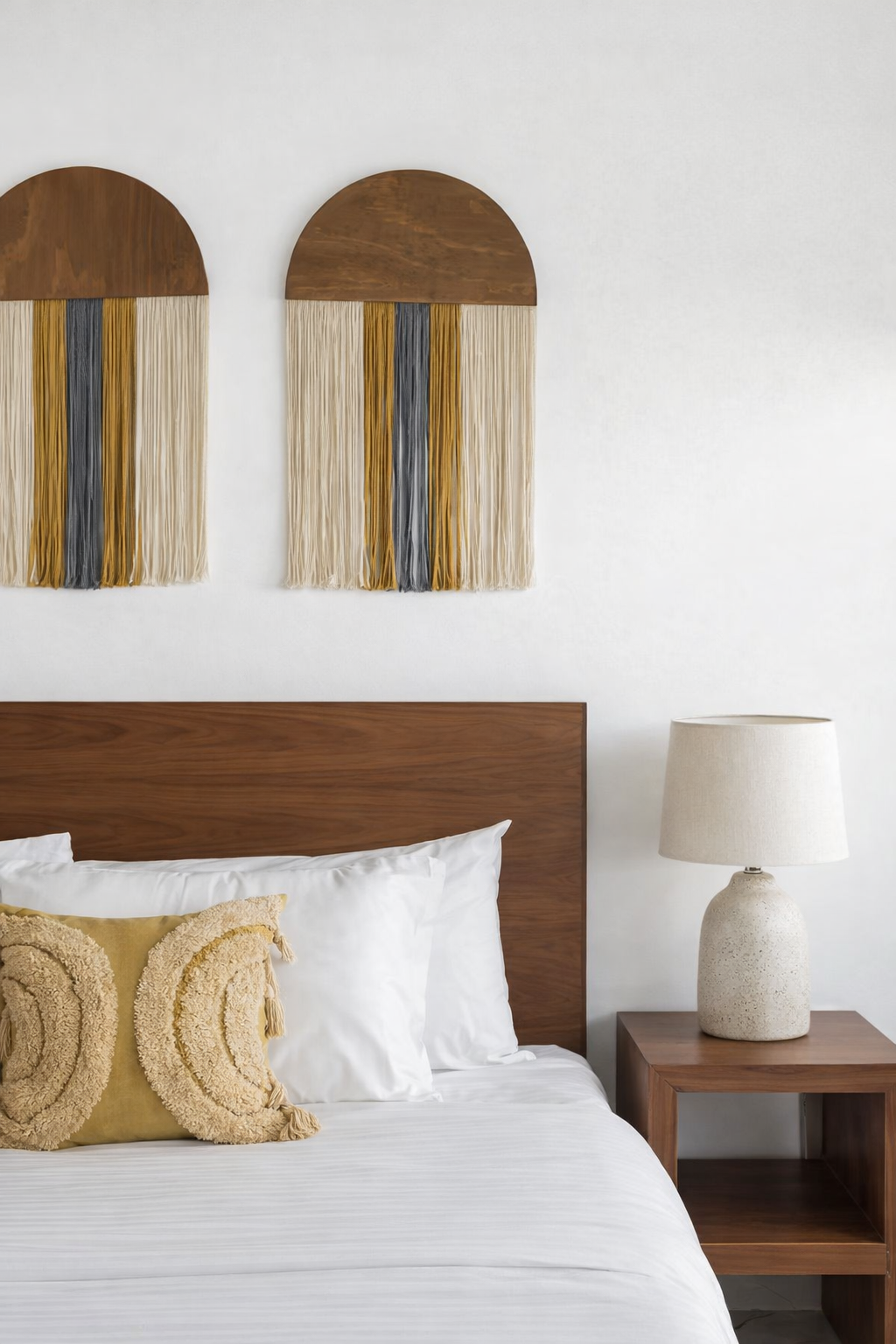
Finishing layers that echo the room’s palette and proportions without overdoing it.
Though it may feel counter-intuitive, paint color is one of the last things you should choose. Light in Puerto Vallarta is strong and reflective, and it shifts dramatically depending on orientation, time of day, and surrounding materials. Choosing paint too early often locks people into a color that felt right in an empty room, then starts to feel off once the furniture, textiles, and materials enter the picture.
The finishing layers are much easier to choose once the foundation is in place. Shopping gets more efficient too, because you know what the room actually needs. You’re not guessing at color, repeating textures blindly, or buying décor that ends up feeling random when everything else arrives.
For rentals, this takes pressure off the timeline. Get the home comfortable and functional first, then finish it with intention.
What pulls a room together doesn’t need to come first. It needs something solid to pull from.
Design insight: The final layers of a home work best when they respond to what’s already in place.
When “all at once” is The Goal
Some homeowners are insistent on wanting everything completed in one sweep — furniture ordered, delivered, installed, and styled before anyone ever stays there. That’s a valid goal. It just requires a different plan.
A short trip isn’t enough for that level of completion. Delivery timelines, installation windows, and inevitable adjustments make it unrealistic to expect everything to land while you’re here briefly. If the goal is a fully finished home without multiple return trips, the work has to continue while you’re not present.
This is where delegation becomes less of a luxury and more of a logistical choice. Designers can handle ordering, deliveries, coordination, and installation remotely, using the layout and concept framework that either you or they have created. Art, décor, bedding, and finishing layers can be specified and installed as part of a turnkey process, without you needing to fly back and forth.
In that scenario, your role shifts. Instead of trying to compress everything into one visit, you plan one trip to experience the space, and another — or none at all — once the home is ready. Deliveries can be received by a property manager or trusted contact, and the home can go live without the stress of micromanaging it from afar.
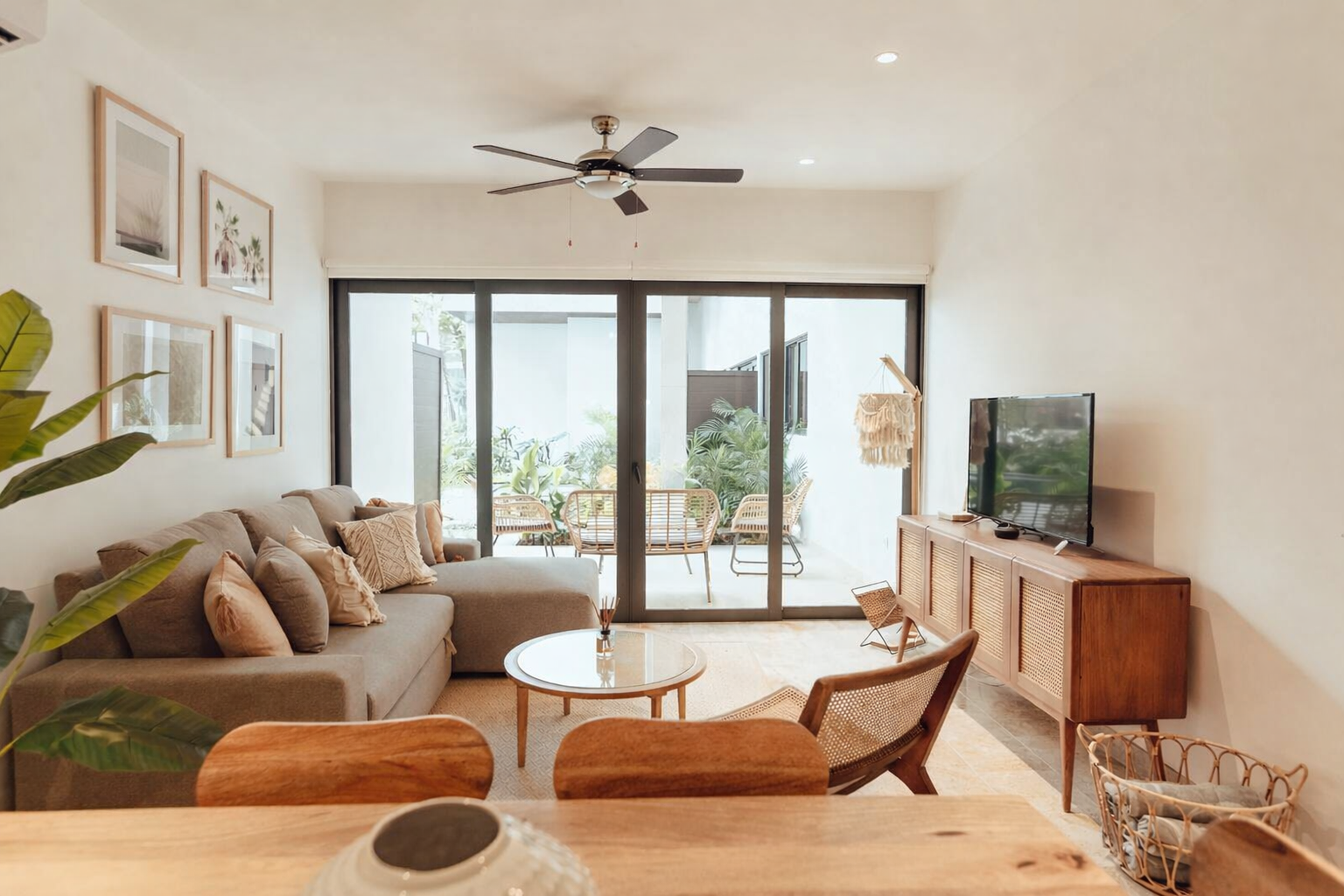
A settled space that’s ready to live in now, with room to evolve over time.
Design insight: Wanting everything done at once isn’t the problem. Planning for it is the difference.
There isn’t one correct timeline. There’s only the timeline you can realistically support — with your trips, your tolerance for logistics, and how quickly you need the home to function. When the plan matches reality, the process stops feeling stressful. If you would like any assistance with furnishing your new home on any timeline, let’s chat.
