Interior Design Trends in Mexico: What I Saw at Expo Mueble Guadalajara (2026)
I spent three full days at Expo Mueble this year — sourcing for clients, meeting with suppliers, and paying attention to what’s shifting so I can thoughtfully weave it into my own designs this year. The expo is enormous. Even after three days, I didn’t get around to seeing everything. It starts to feels a little like Vegas, with more tasteful decor. I ran around for 6-8 hours a day— the lights never dim, and at some point you lose track of time. By the second day, everything starts to blur a little. Luckily, that’s usually when the bigger patterns begin to show.
All in all, there wasn’t one loud, dominant trend. But I did notice shifts in how furniture is being made, how it’s scaled, and how it’s valued.
A lot of foreigners still come to Mexico expecting furniture to be inexpensive. And sure, it can be. There are talented workshops across the country that can build almost anything you can imagine. But much of what was showcased at the expo is operating at a different level.
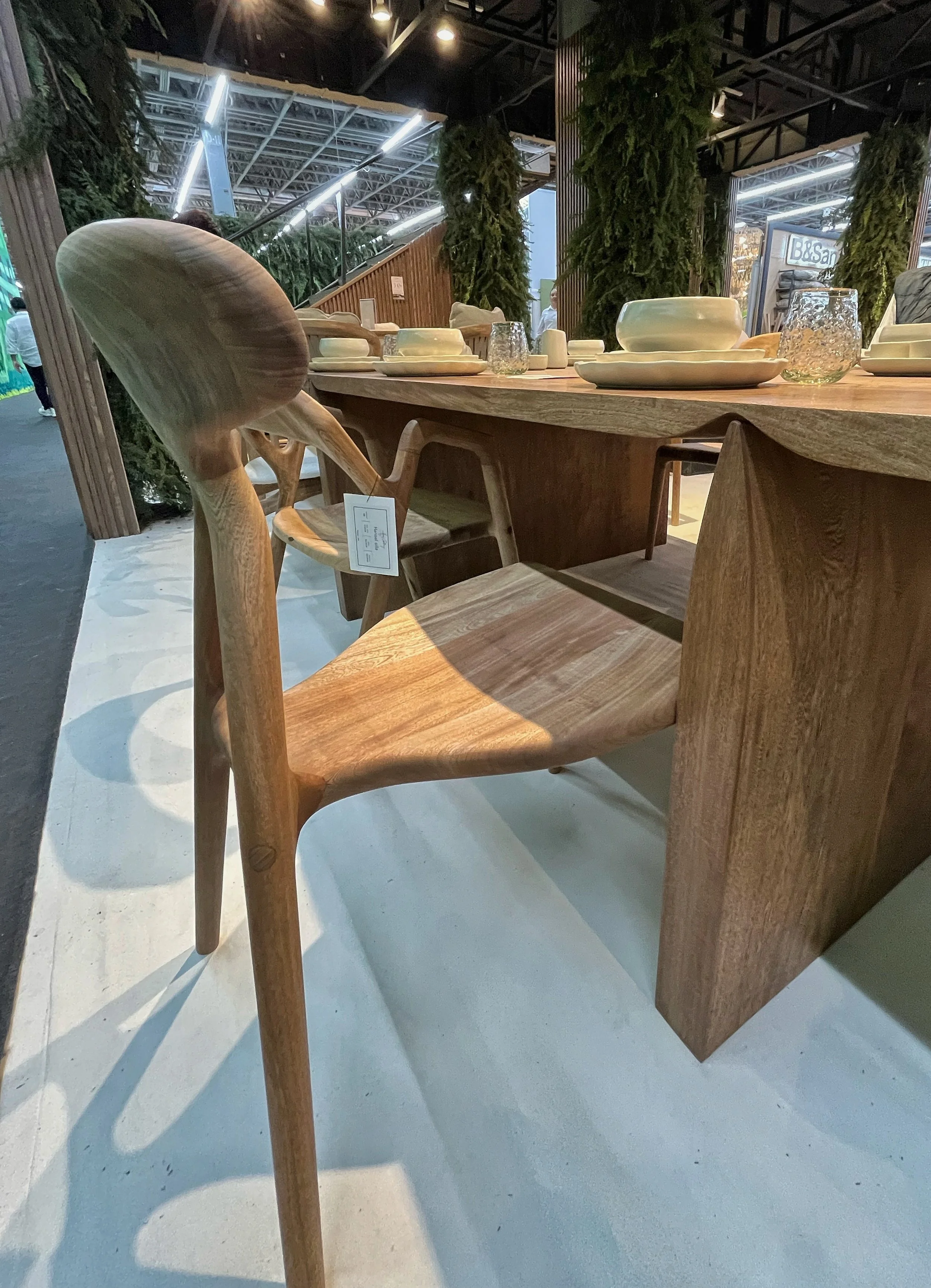
Carving and proportion doing more of the visual work — depth built directly into the structure - HAUS Gallery
To put it plainly, this is very good furniture. The proportions are refined. The detailing is intentional. The finishes are layered and controlled. I remember walking the expo years ago when many vendors wouldn’t allow photography out of fear their designs would be copied. Now, they encourage it. They aren’t worried about being replicated by a run-of-the-mill workshop down the road because the craftsmanship relies on carved motifs, colored glass, specialized shaping techniques, aging processes, and finishing details that aren’t easy to duplicate.
That doesn’t diminish the quality of local workshops. It simply highlights a different category of production — one rooted in strong design identity and technical control. When brands operate at that level, you begin to see patterns emerge across the floor. Certain proportions repeat. Similar material treatments appear in different booths. And it isn’t because everyone is copying each other, but because there are shared directions taking shape. Here is what stood out.
Built-In Texture
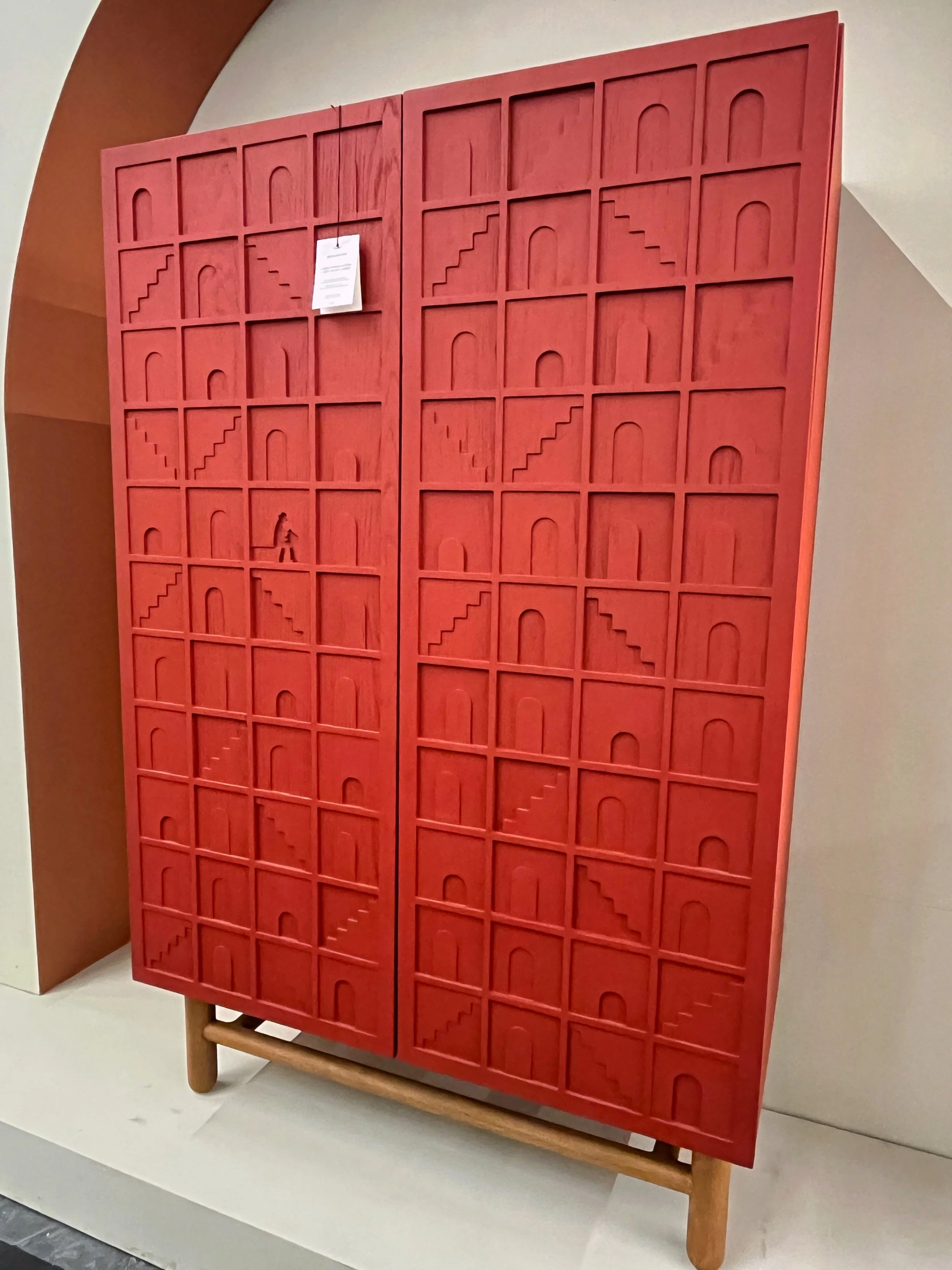
Texture integrated directly into structure, with carved motifs adding dimension to a bold, single-color form - Mola Creativo
Texture was one of the clearest through-lines across the floor. Cabinet fronts were carved, fluted, ribbed, or deeply grooved. Wood surfaces carried visible grain and hand-finished variation. Metal was brushed, hammered, or darkened in ways that added visual intrigue.
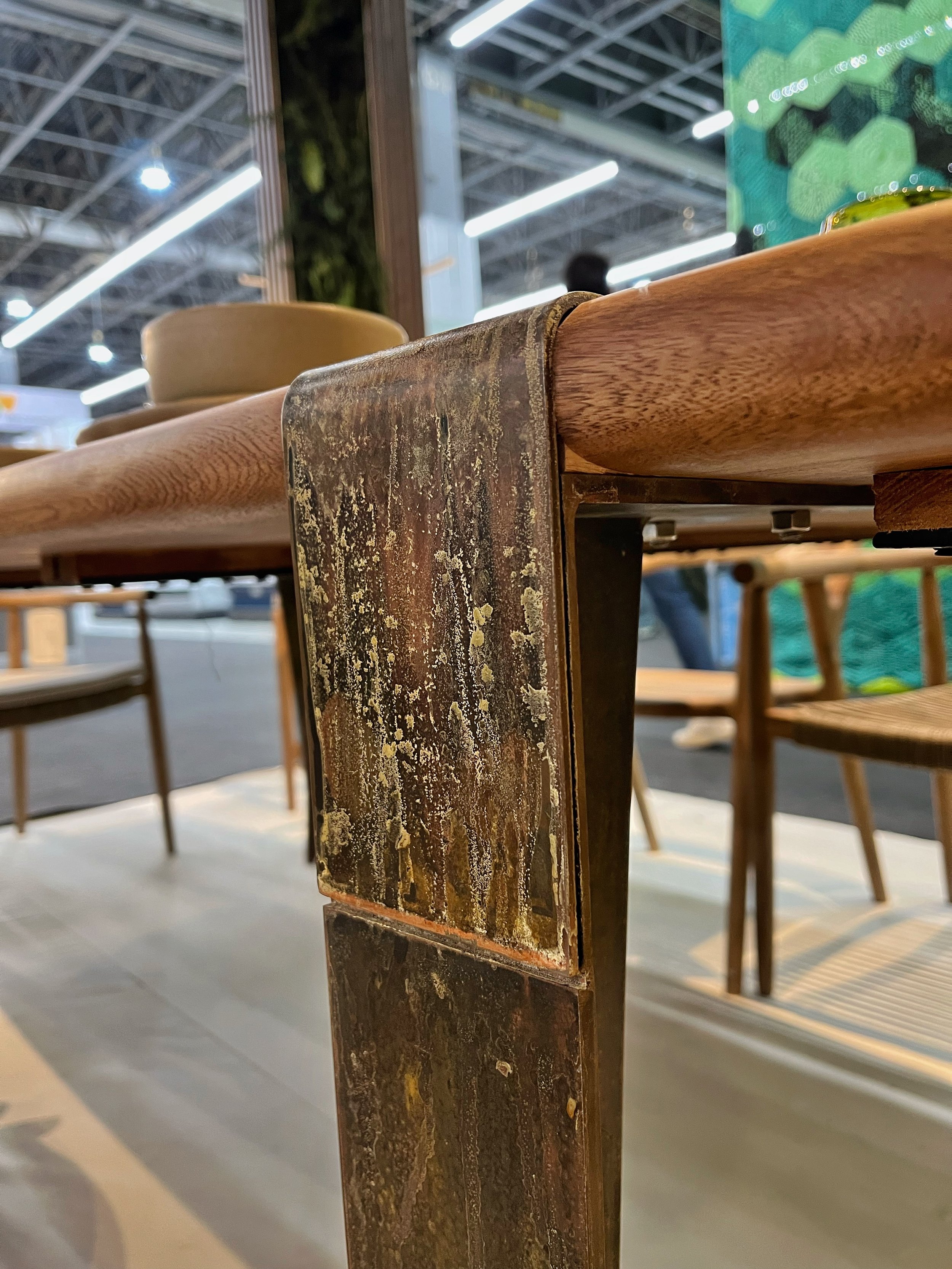
Patinated, aged metal contrasted with soft-grained rounded wood table top - HAUS Gallery
The detailing was integrated into the construction itself. When light moves across a carved panel or catches on a textured surface, the piece changes throughout the day. In bright, open interiors, that kind of dimension adds richness without having to add more objects to the room.
The art that was showcased alongside furniture followed the same language. Lots of textile art re-imagined. Mixed-media pieces combining textiles and plaster were layered thoughtfully.
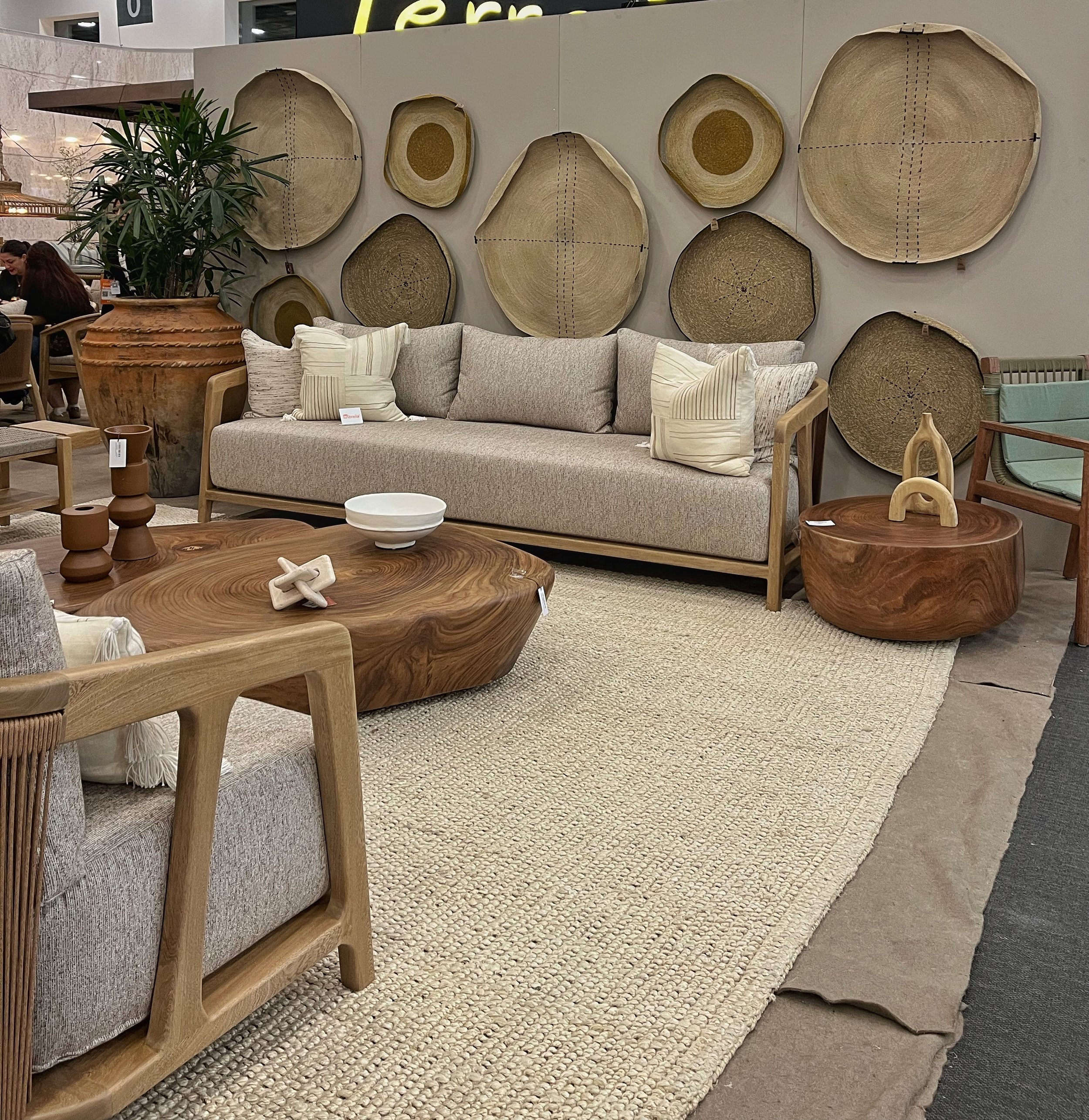
Grain against weave, matte clay against polished wood — a space where texture carries the interest and tone stays quiet - TerraCu Muebles
Some 3D-printed canvases seemed to shift as you moved past them. Wood panels carried raised relief, and rope installations extended outward rather than sitting flat against the wall. Across the board, the work had depth. Furniture and art felt connected in their use of material and dimension, which gives a space cohesion and interest without trying too hard.
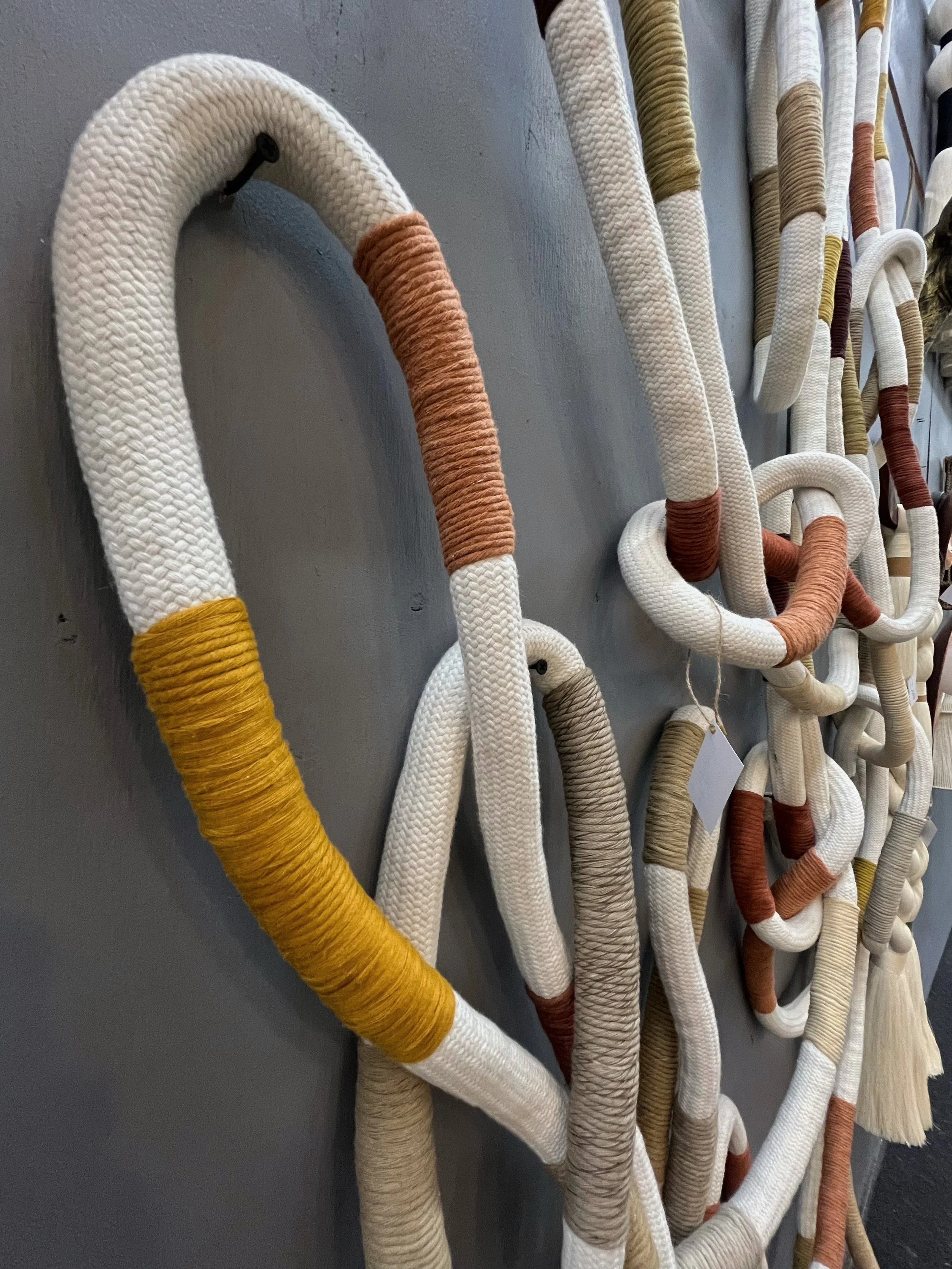
Thick rope wrapped in shifting neutral tones, forming sculptural loops that bring softness and movement to the wall - Amu Illuminacion
Materials in Conversation
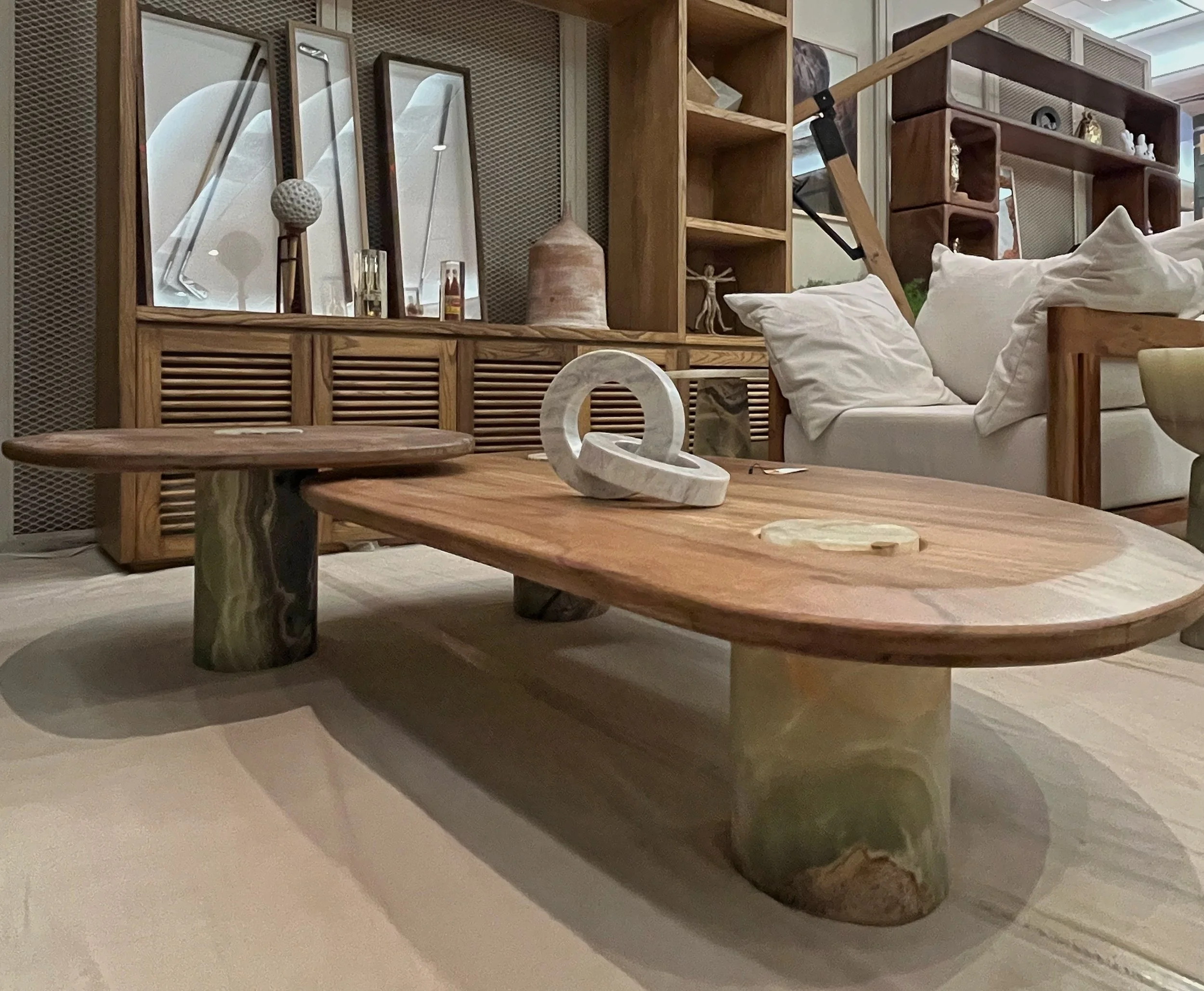
Walnut coffee table with inset Onyx base
Materials were mixed within single pieces in ways that felt composed. Lighter woods appeared alongside blackened finishes in the same frame. Stone was inset flush into wood surfaces instead of sitting on top. And in a few pieces, colored glass was introduced in small but striking ways — casting tinted light onto a wall when a cupboard door opened, shifting the tone of whatever was placed inside. It added a quiet sense of playfulness to otherwise restrained forms.
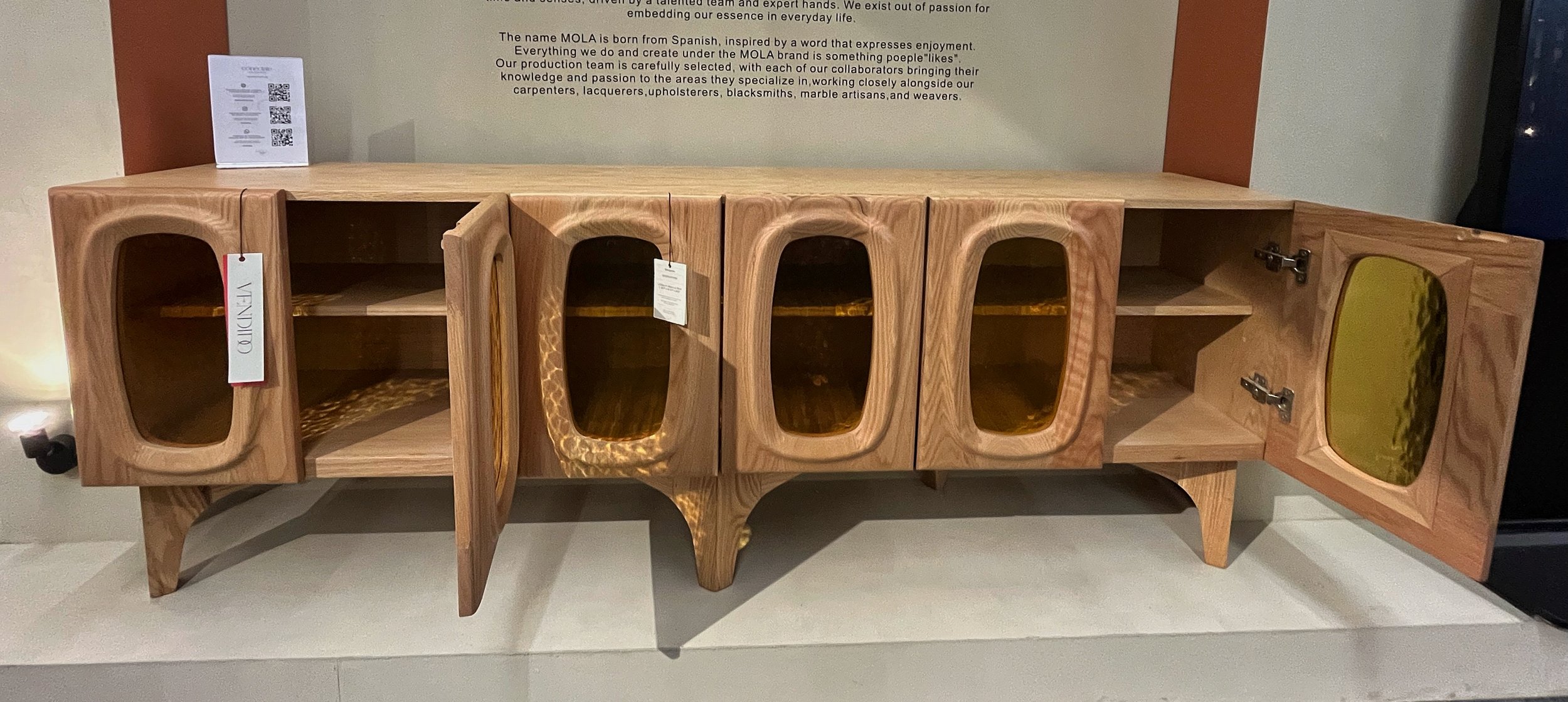
Amber glass set into carved wood panels adds warmth and a quiet playfulness, subtly transforming what’s stored inside - Mola Creativo
The way these materials met felt resolved. Joints were tight. Transitions were clean. Finishes were layered with care. You could see the thought in the details — in how edges aligned, in how surfaces transitioned from matte to brushed to polished without feeling abrupt.
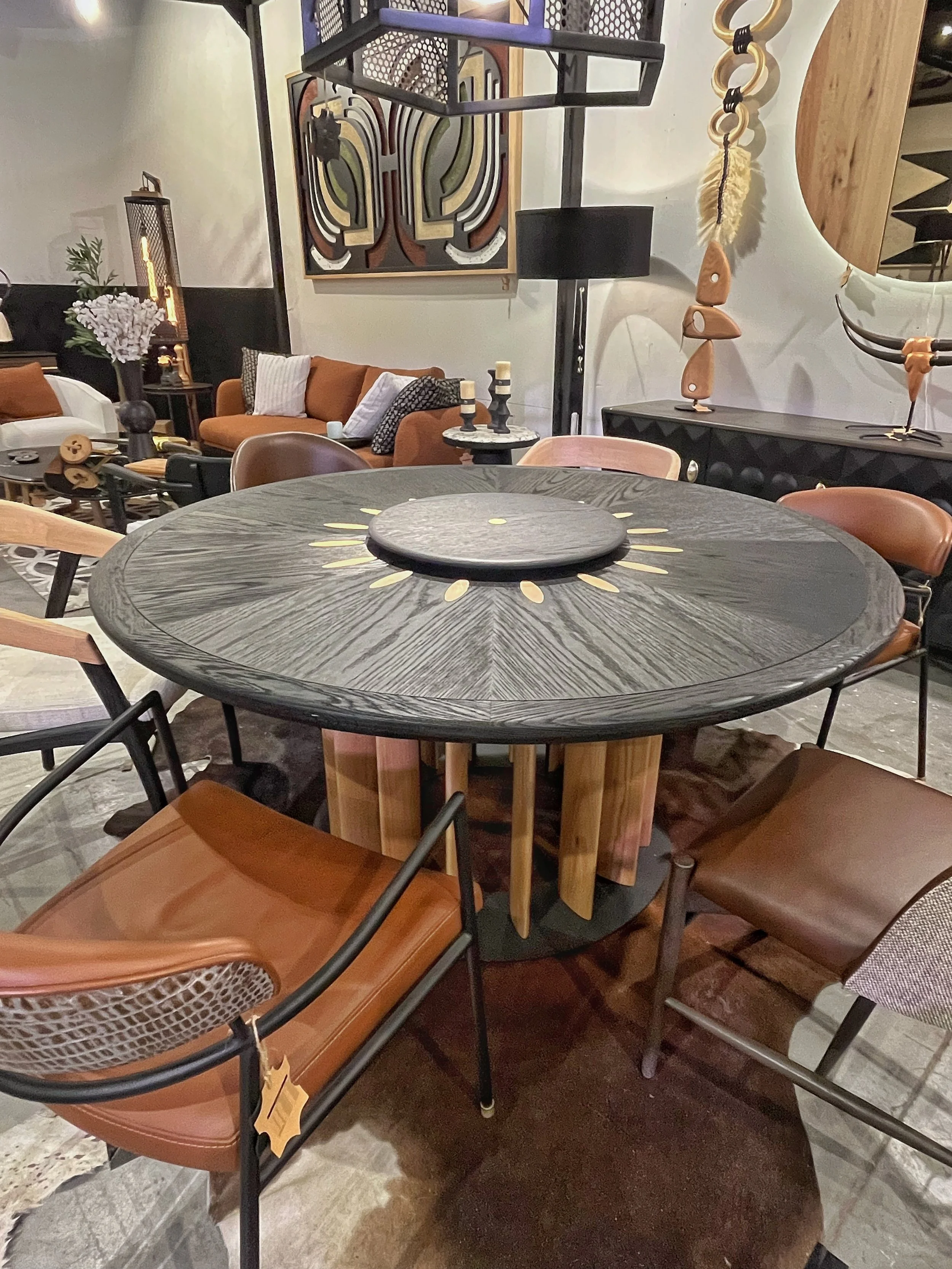
Multiple wood tones layered into one piece, paired with leather seating and matte metal frames. Nothing matches, but everything relates - Assanti Muebles
Substantial Scale, Softer Lines
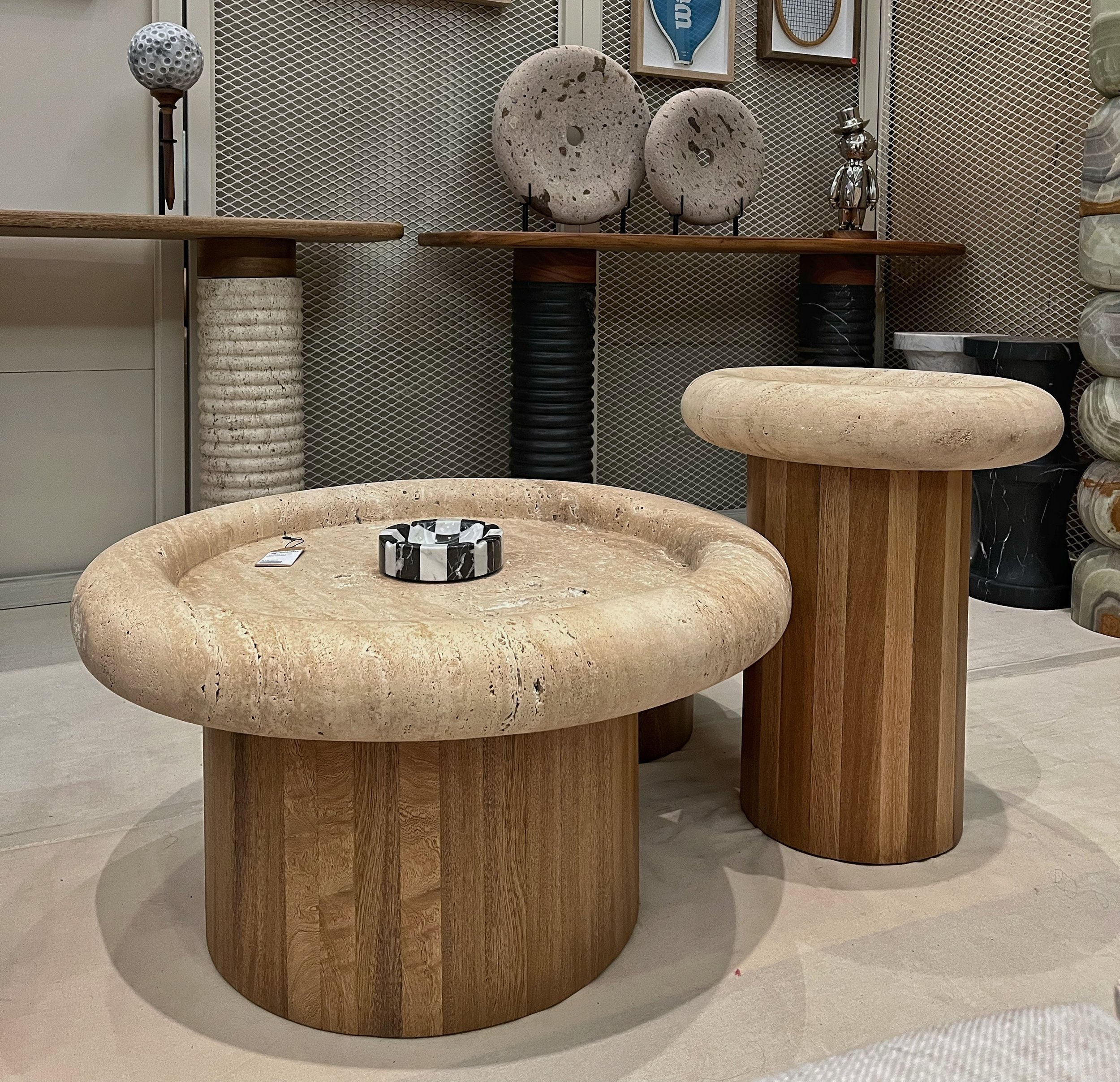
Travertine carved into deep, rounded forms sits on solid wood bases, giving the tables a sense of weight even at a lower height.
Proportions overall felt bigger. Sofas were wider, arms thicker, cushions deeper. Coffee tables were bulkier even if they weren’t necessarily larger. Upholstered beds felt more substantial.
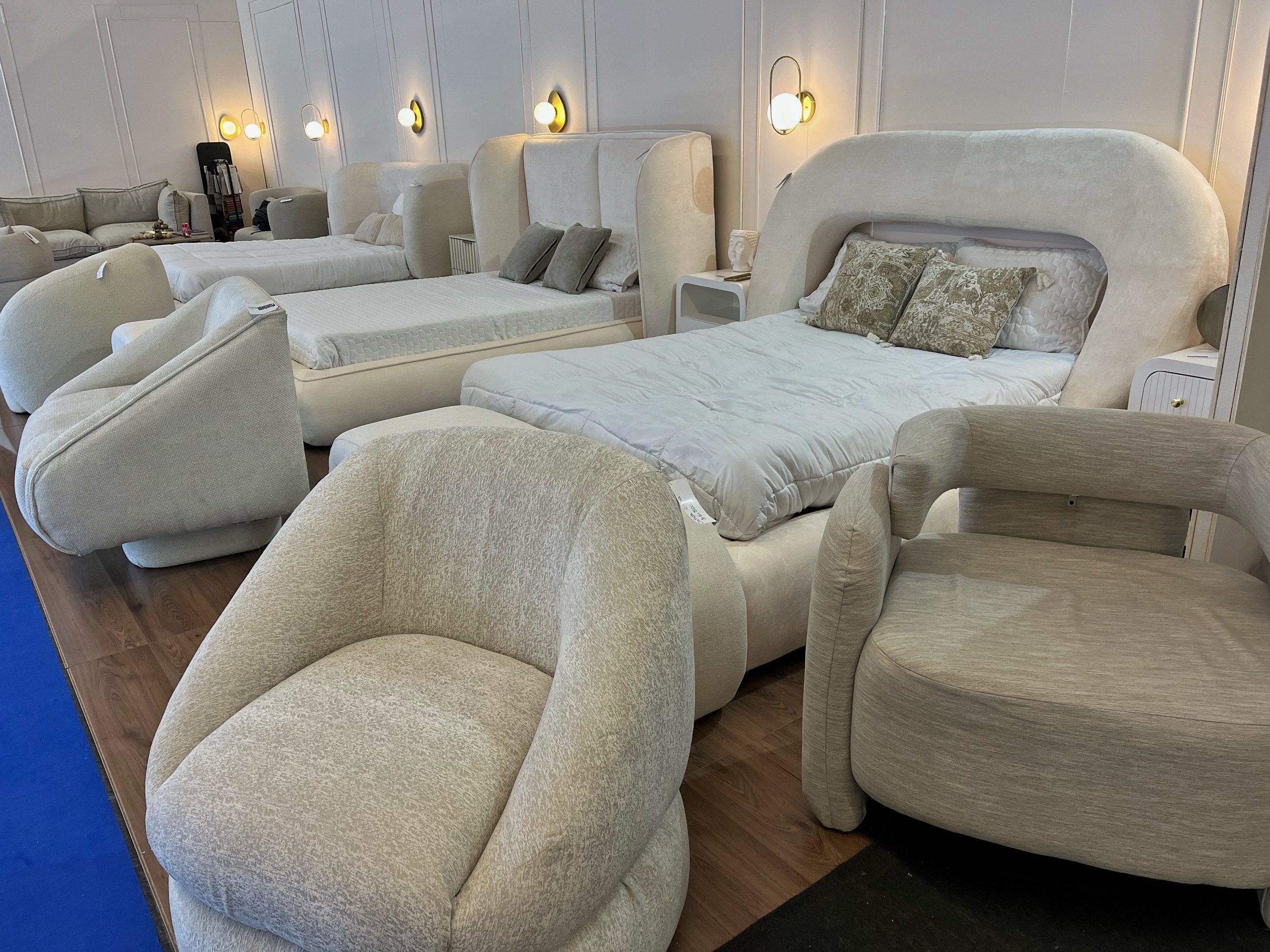
The scale is generous, but the lines are soft — enveloping forms that feel substantial without feeling heavy.
A lot of this scale seems designed for open-concept living, the kind of layouts common in newer builds and condos here in Mexico. In those spaces, furniture has to do more work. It has to anchor the room and define where living actually happens, even when there aren’t walls to help, both inside and on large terraces.
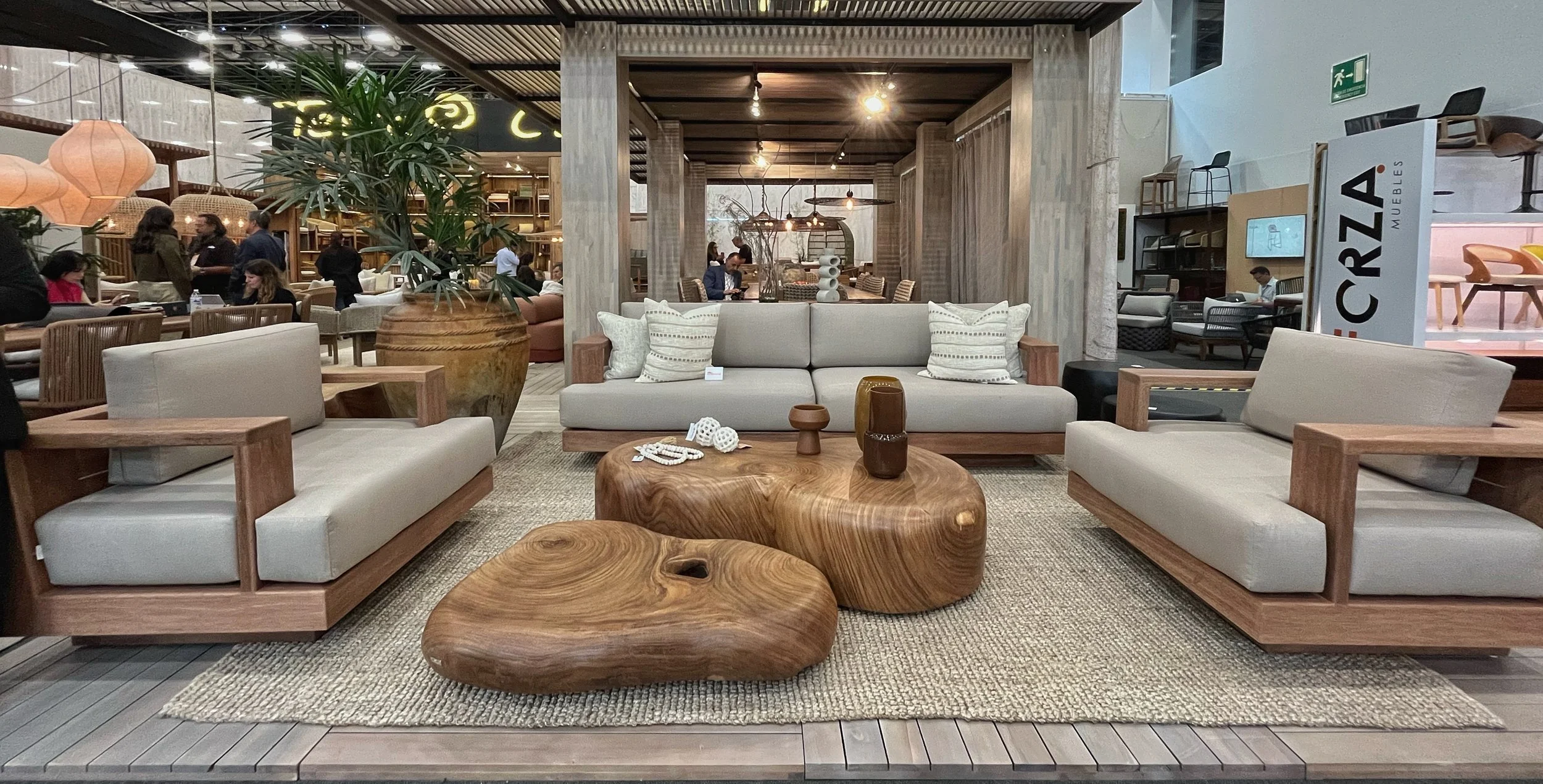
Outdoor spaces demand presence. Broad arms, low profiles, and weighty tables give the seating area definition without walls around it.
Alongside that increase in scale, silhouettes were noticeably softer. Rounded backs, curved arms, pill-shaped tables, and cylindrical bases appeared again and again throughout the expo. Curves themselves aren’t new, but they feel more integrated now, helping guide the eye back toward the seating area instead of letting it drift into empty space. They soften the edges that can make open layouts feel stark, bringing a sense of balance to larger rooms. Comfort is clearly being considered, but not at the expense of form — proportions remain generous, upholstery substantial, and silhouettes controlled. The result is furniture designed to be lived with while still holding its shape.
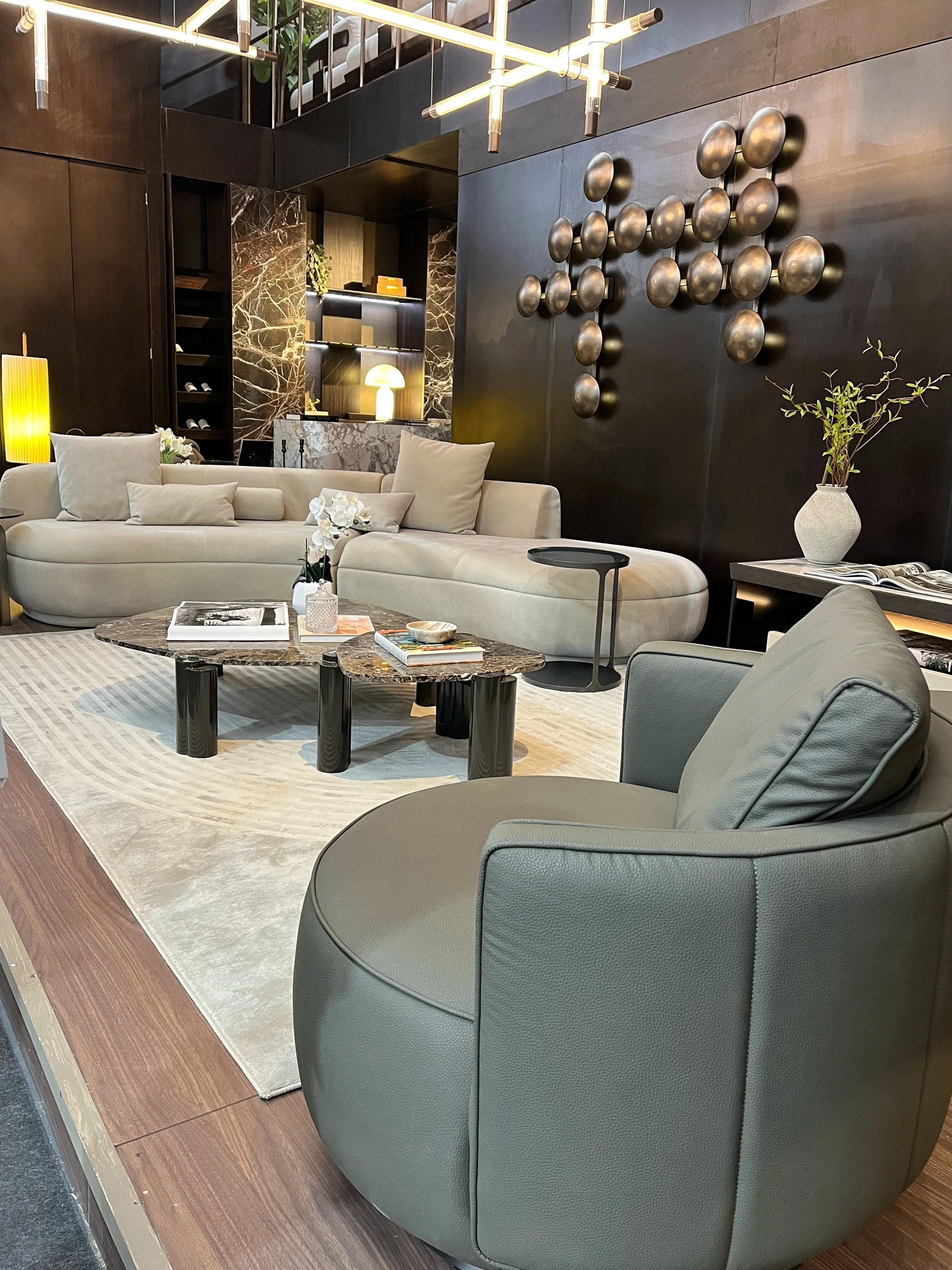
Scaled for a larger, open room, the long, low sofa and rounded lounge chair carry real presence. Even within a deeper palette, the softened edges keep the space feeling welcoming.
A Deepened Palette
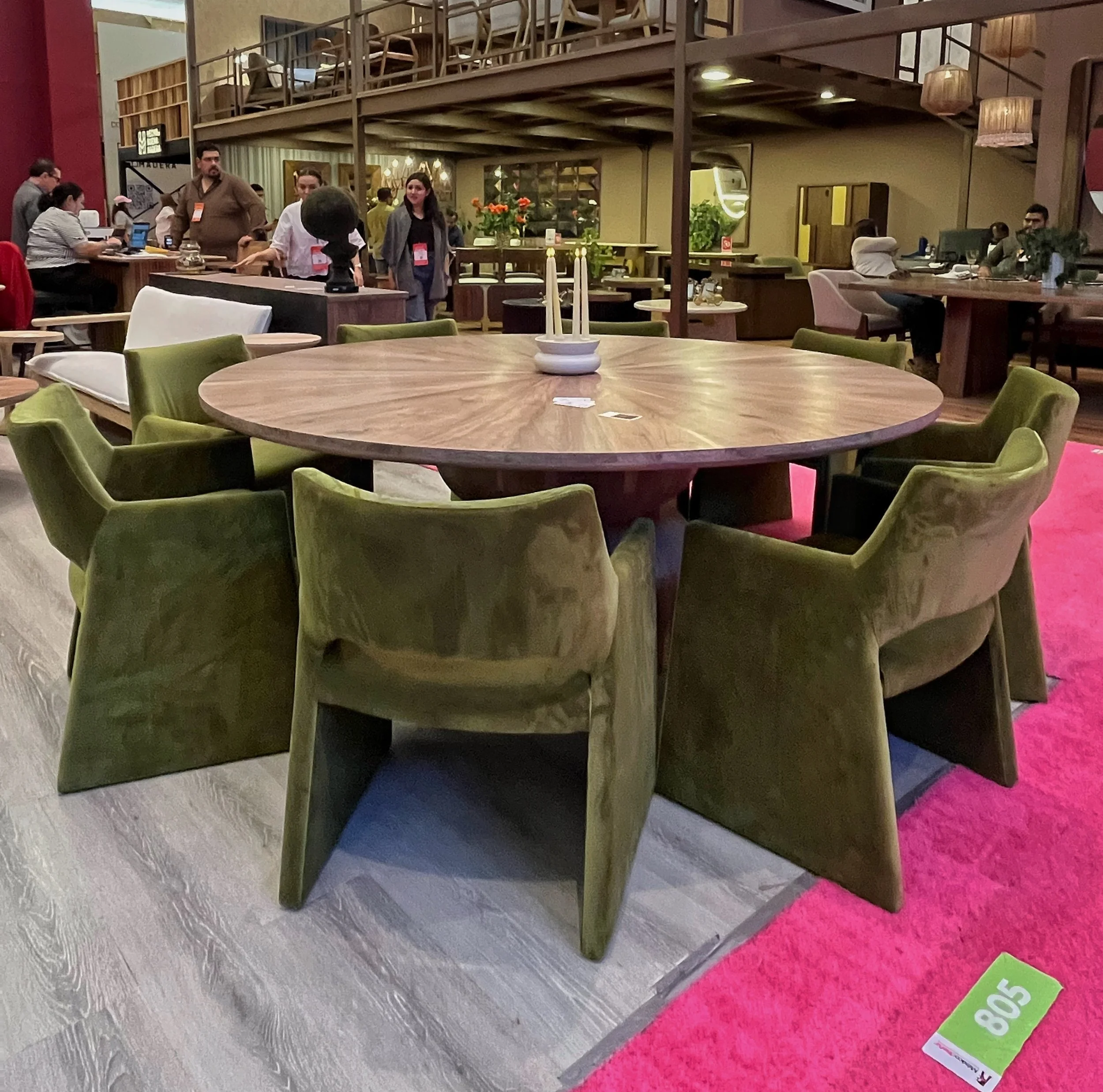
Neutrals still dominate, but they lean warmer. Greys felt closer to stone and mushroom rather than cool blue tones. Olive and moss appeared often, especially in velvet or textured fabrics. Rust and rich browns showed up in leather and accent pieces. Black was used more as structure and contrast than as a main color, but is definitely showing up in accents.
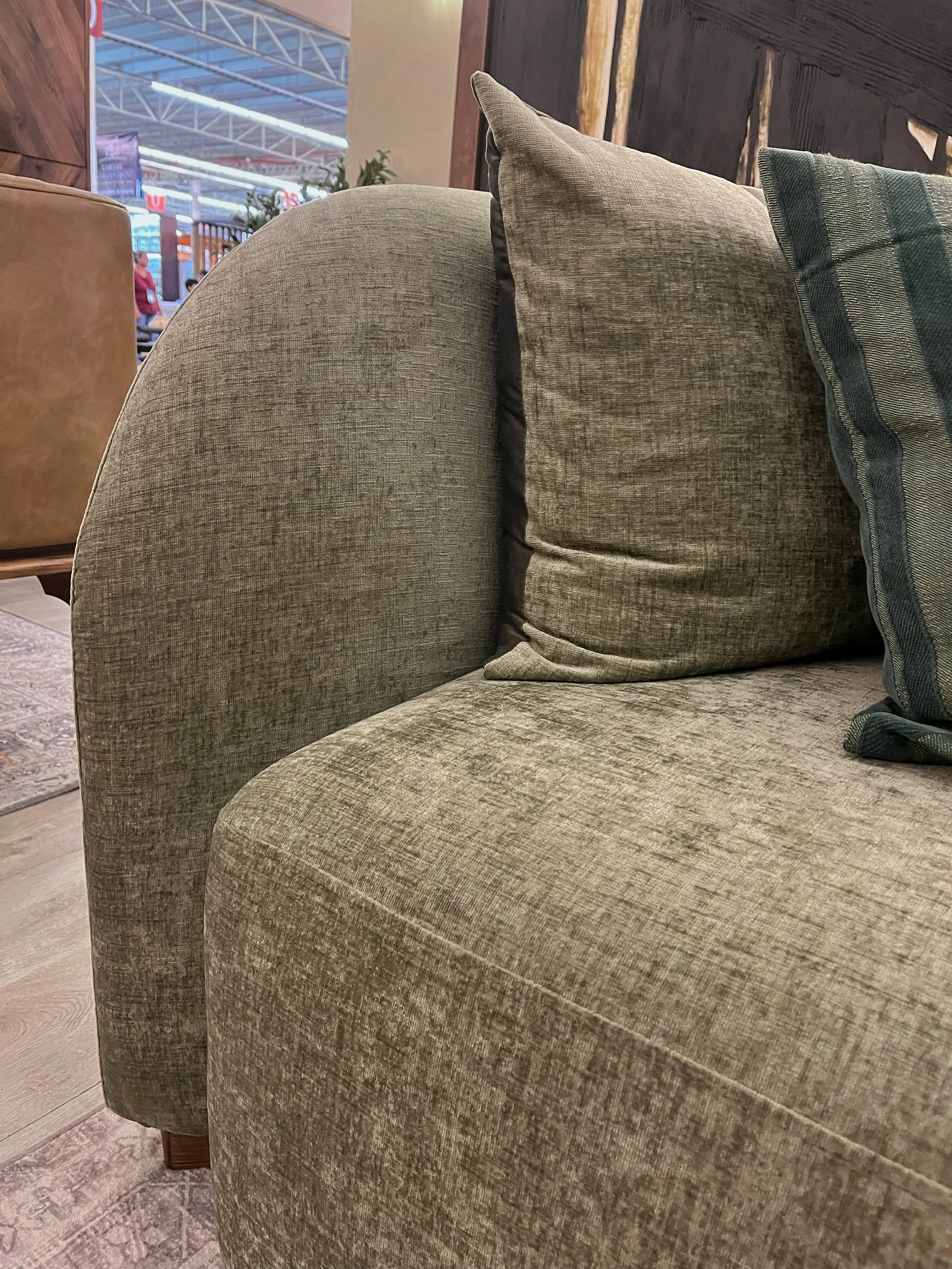
Olive, but softened in velvet — the texture in the fabric gives the color movement, keeping it rich without feeling heavy.
The palette hasn’t shifted dramatically, but it feels deeper. Texture reinforces tone. Warm neutrals layered together create atmosphere without relying on bold contrast.
It’s less about introducing something new and more about refining what’s already there.
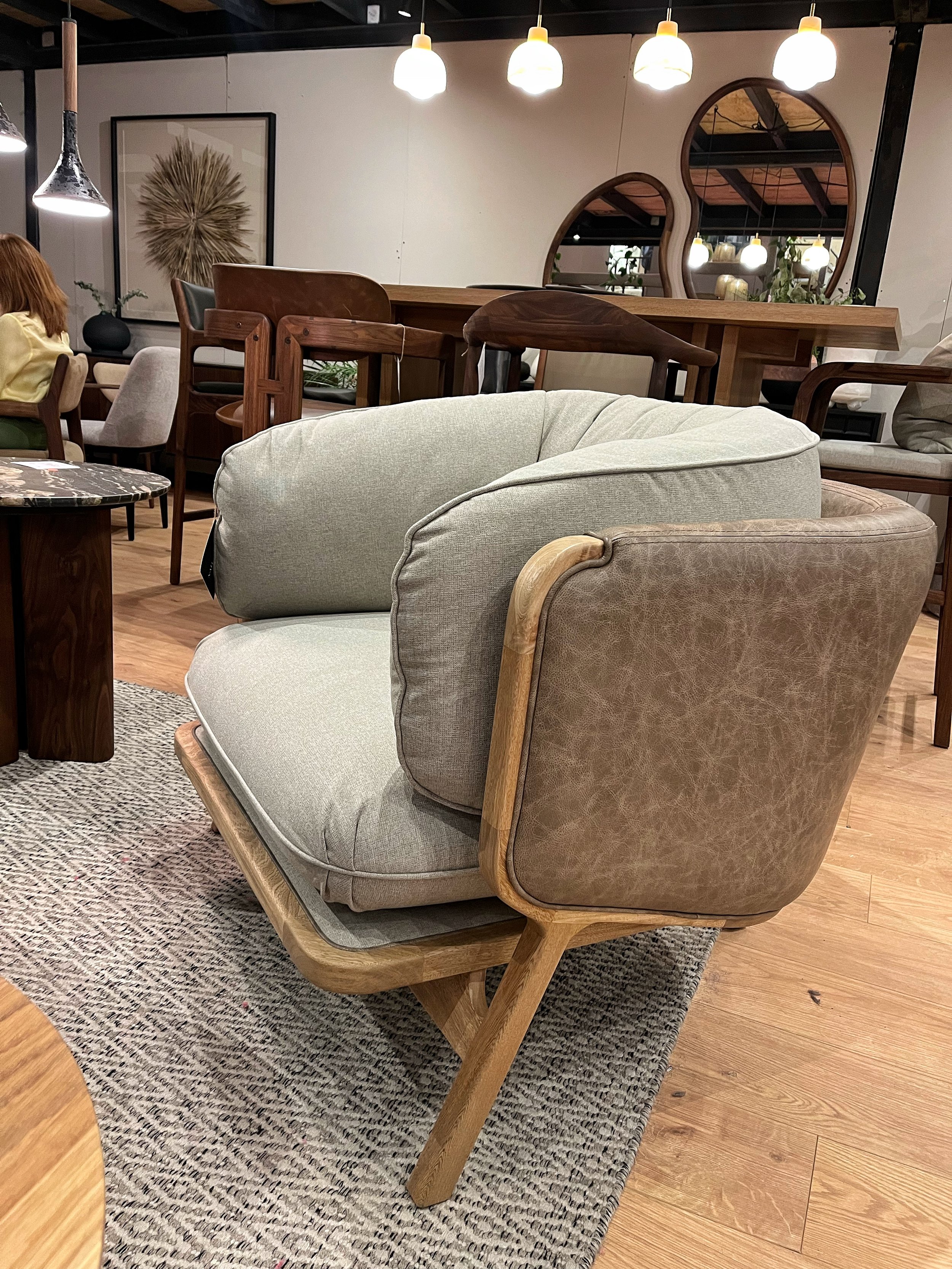
Soft grey and warm taupe paired with natural wood and worn leather, for a layered neutral palette that feels both contemporary and cozy.
Lighting with Presence
I loved seeing an increase in the variety of lighting this year, especially in sculptural forms. Many of the fixtures felt like statements in their own right — a presence in the room even before the light itself is turned on.
Across the expo floor, lighting appeared in many forms: sculptural pendants, wall sconces, floor lamps, and built-in elements. Woven materials were still present, but the shapes continue to evolve, with designers exploring new proportions and more expressive silhouettes.
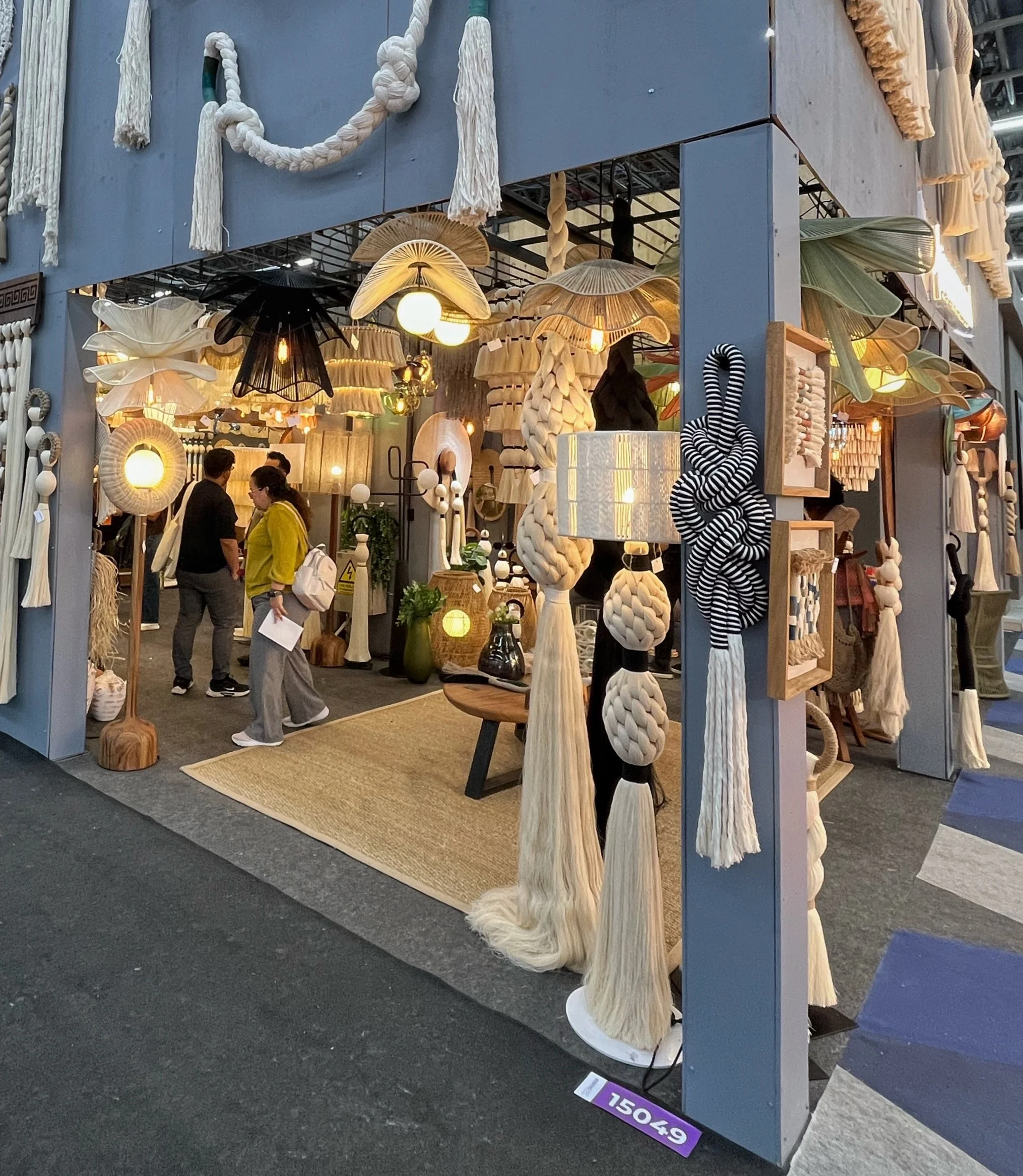
A collection of sculptural pendants and lamps, highlighting the range of forms lighting at the expo. Pleated shades, geometric structures, and layered silhouettes show how fixtures are increasingly treated as objects in their own right.
Wood also appeared frequently, often carved or layered into sculptural forms, while other fixtures used pleated or molded materials that resembled paper or lightweight composites to create soft, dimensional shades.
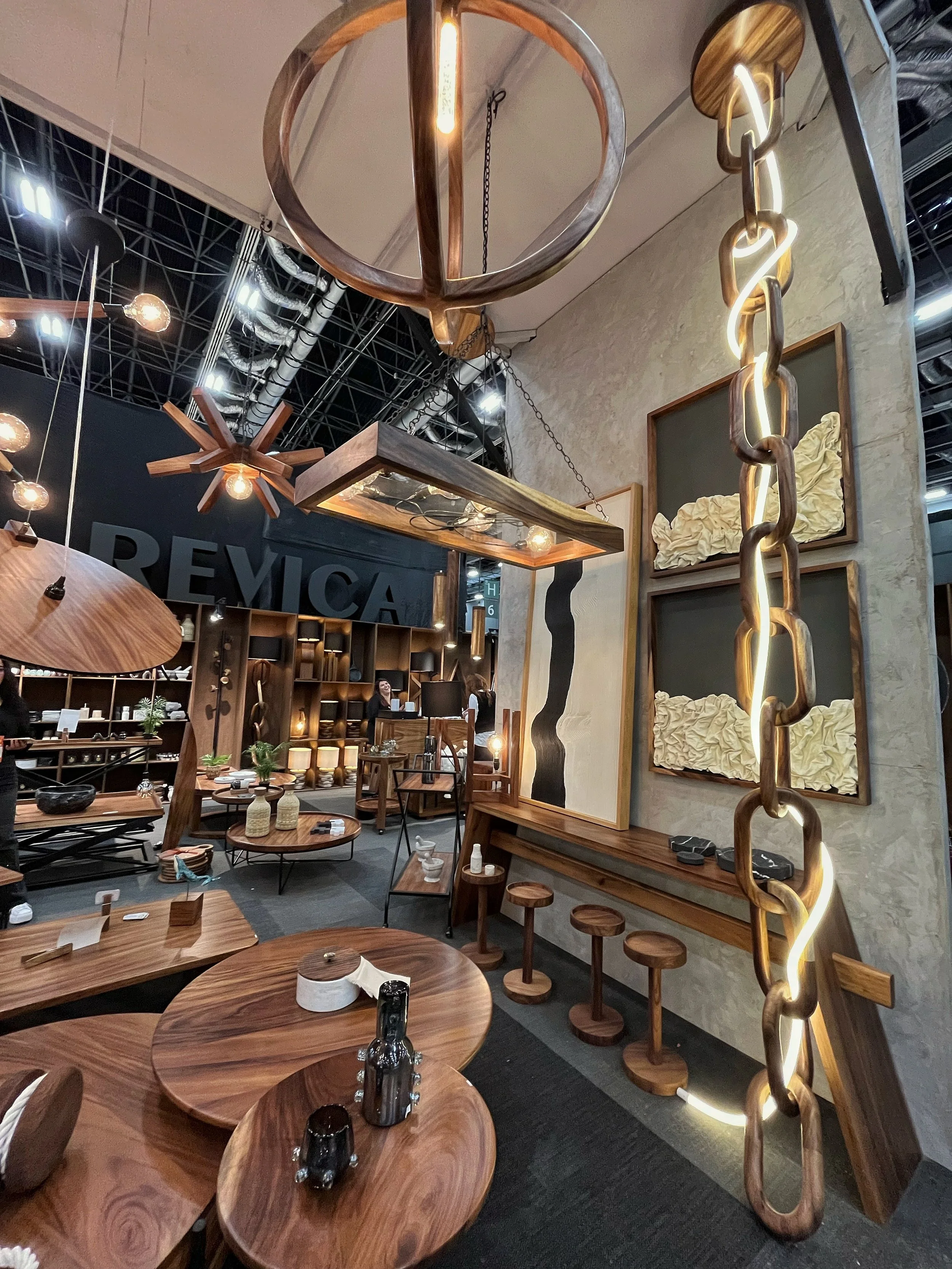
Wooden lighting fixtures take on bold, sculptural forms, from large circular pendants to articulated floor lamps. The natural material adds warmth while allowing the pieces to read almost like furniture.
These fixtures didn’t stop at offering light and ambiance, they carried enough presence to stand comfortably on their own. They’re the kind of pieces that would help define a space, adding form, texture, and visual rhythm alongside the furniture and materials around them.
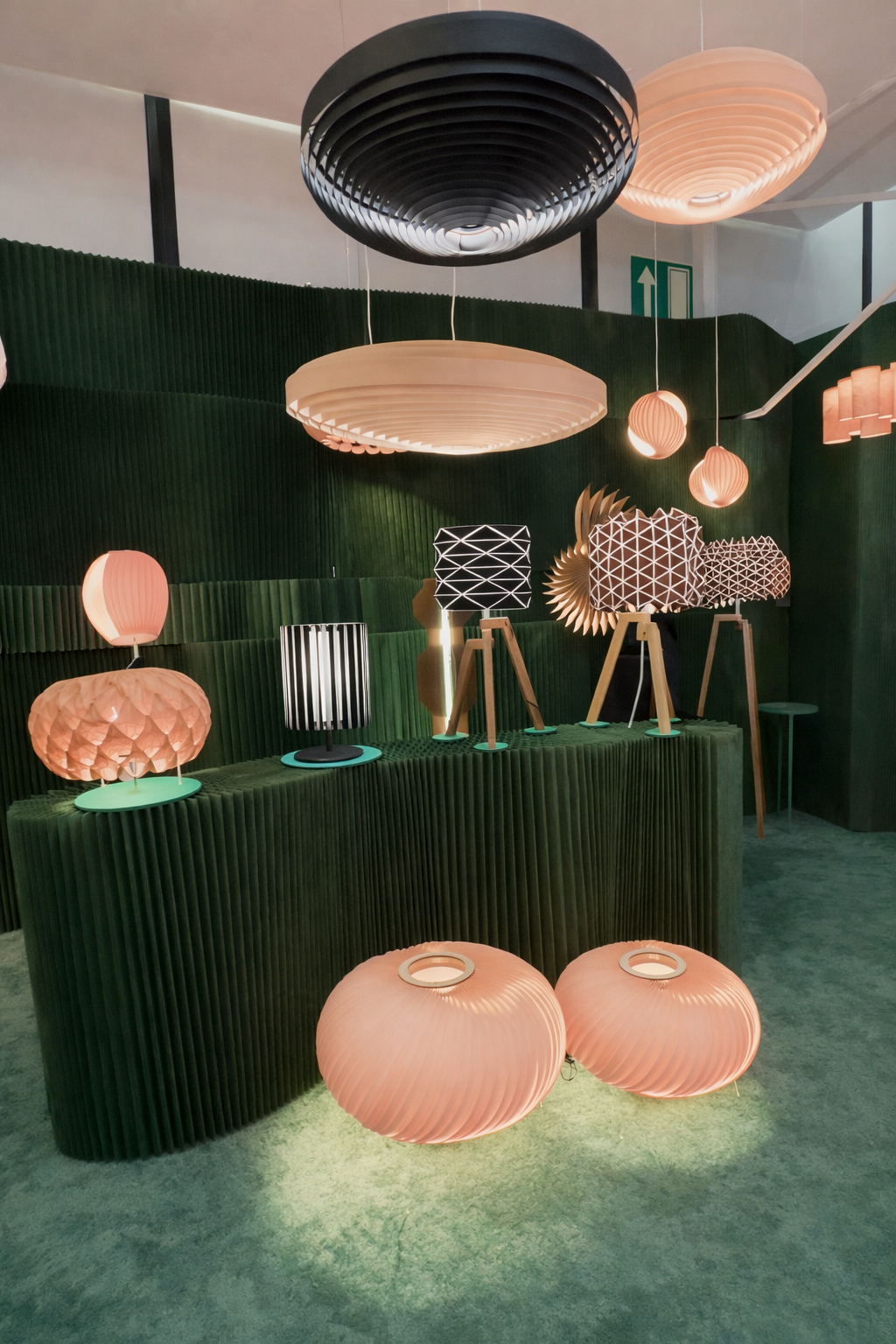
Pleated and folded shades show how lightweight materials are being used to create expressive lighting forms. The layered surfaces soften the light while giving the fixtures a sculptural quality.
Built to Hold a Room
After three days immersed in it, what stayed with me wasn’t one standout piece or a single defining trend. It was the overall presence of the work. The scale felt deliberate. The detailing felt thoughtful. Even familiar forms — curves, olive tones, sculptural lighting — carried substance behind them. There’s a steadiness to what’s being produced. Materials and proportions are meeting in such intruiging, intentional ways. Texture and color are alive and well sitting comfortably together, holding their depth in strong natural light and larger rooms that are getting personal again.
Walking the floor, I kept noticing how settled everything felt. The pieces didn’t seem eager to impress, even though they did. They felt complete — thoughtful, substantial, and made with the expectation that they are here to stay.